You did not choose
where you were born.
You did not choose
the language stamped
onto your first documents.
You did not choose
whether your passport
would open doors
or ask permission
to knock.
And yet a booklet issued by a state can decide where you may work. Where you may study. Where you may love. Where you may build a life. Where you may run when staying becomes impossible.
A passport is supposed to identify you.
Instead, it ranks you. It dooms you.
Some passports function like keys.
Others like apologies.
Others like a verdict,
evidence that you were born
on the wrong side
of a line somebody else drew.
The visa is one of the strangest objects
we have collectively agreed to call normal.
But it isn’t normal.
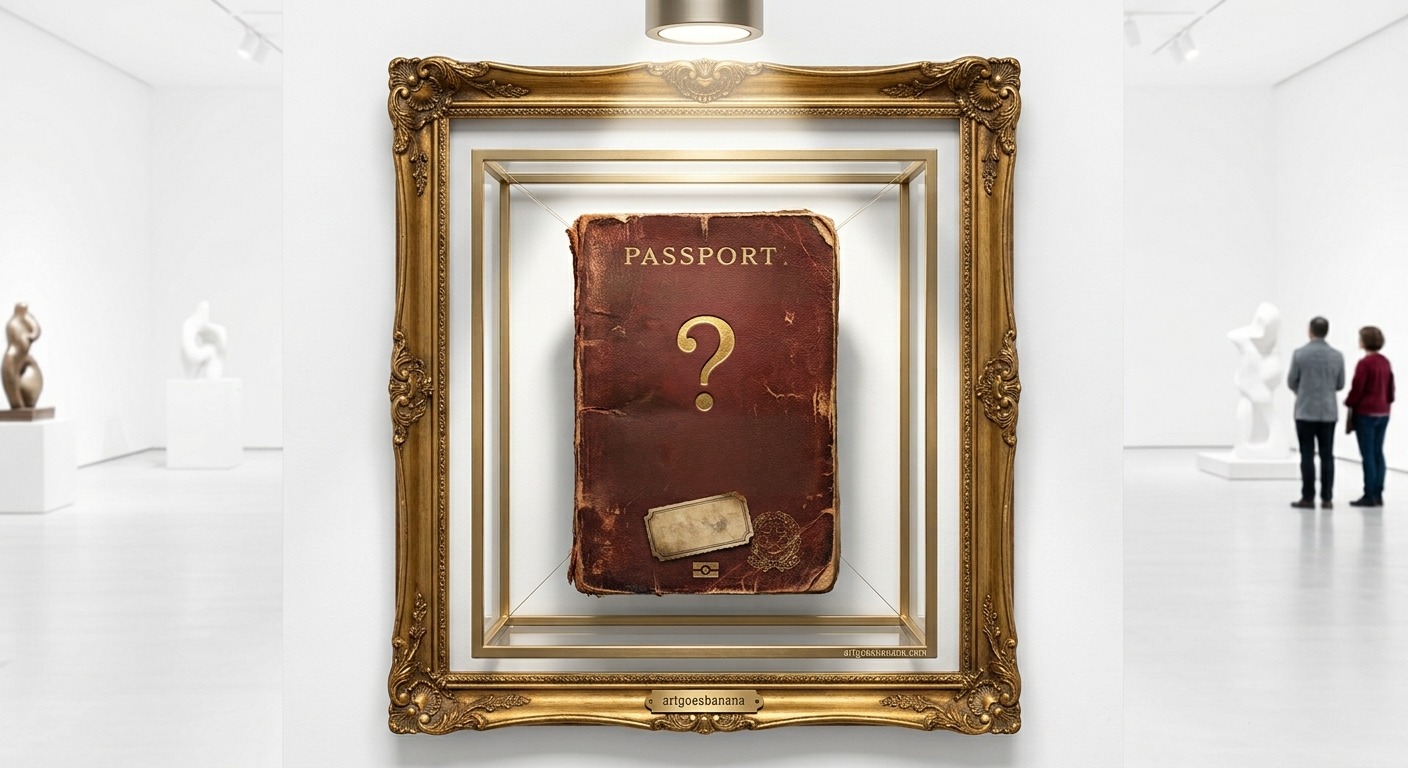
A visa should be a relic.
Something future generations find
in a museum of old human absurdities.
Next to colonial maps.
Apartheid signs.
And the paperwork
that once explained
why one human being
could cross an ocean for a holiday
while another could not cross a street
to build a life,
defended by people
who never once asked why.
Not because you did something wrong.
Because you were born
in the wrong administrative fiction.
We look at contemporary art and ask who gets to be seen,
who gets removed, preserved, purchased, displaced, framed.
But perhaps the largest conceptual installation ever built is not in a museum.
It is the border.
That invisible sculpture has no weight, on paper.
But it stands like a mountain
nobody built and everybody walks around,
because everyone before us
walked around it too.
We don’t treat the border as a decision anymore.
We treat it as something that was simply always there,
the way a fence stops being a choice
once enough generations were born
inside it, and called it home instead of a cage.
Nobody voted for it.
But still, nobody questions it.
That is not policy. That is a herd
that forgot it was ever standing in an open field.
We were trained by the world around us
to be sheep, and to call it citizenship.
We spend entire auctions arguing about the provenance of an object, who owned this canvas, through which war, whose hands it survived, and almost never about the provenance of a person. A stolen painting gets a restitution case.
A displaced person gets a waiting room.
Art moves because people move.
Duchamp came from France. Rothko from what is now Latvia. Gorky from Armenia. Ono from Japan. Bourgeois from France.
Remove movement from that history and you don’t get a purer culture.
You get a much poorer one.
And moving is hard enough on its own,
the cost,
the people left behind,
the uncertainty,
the fear.
Nobody needs an ancient document,
a Kafkian machine of stamps and denials,
to make it harder still.
One man crosses the world to reinvent himself;
another stays trapped inside the world that man came to use as material.
A passport should identify you. Not limit you.
A border should describe geography. Not decide destiny.