About Us
What we do
We take the world apart.
A painting, a jacket, a contract, a museum, a logo, a manifesto, a habit. Everything is made of parts, and most of those parts were put together by someone who isn’t around anymore to explain why. We unscrew them, lay the pieces on the table and look at what’s actually inside.
Then we put them back together. Not the way they came. The way we think they should have been.
Sometimes the result is a text. Sometimes it’s an object, a rule, a small provocation, a fake auction, a garment, a question with no ending. Sometimes the way we tell the story of an artwork becomes the artwork.
What we write, you won’t easily find written elsewhere. That’s not a promise. It’s just what happens when you let a group of people think, wildly, without asking permission first.
Art, and everything that behaves like art
We started with art. We didn’t stay there.
Art was never just paint on canvas, and the most interesting things happening right now rarely stay inside one discipline. A designer who treats last season’s overstock as raw material is doing what Fontana did to the canvas. A mathematician who finds infinity in a loop is closer to a composer than to an accountant. A border, a passport, a price tag, a fashion calendar: all of them are systems that someone designed, and anything designed can be redesigned.
So we write about art, and about everything that behaves like art:
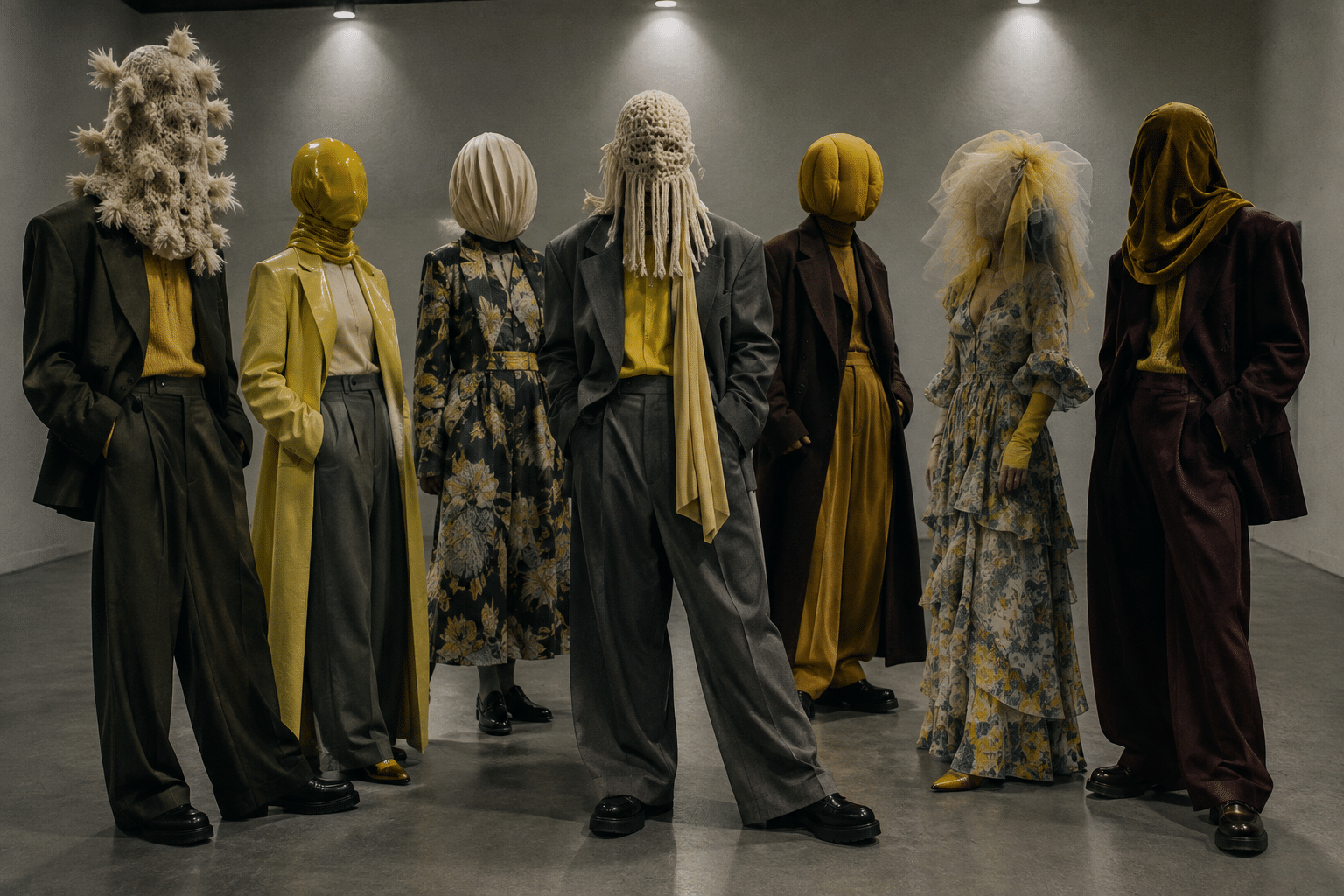
- Wearable art, because clothes are architecture you live in, and fashion is one of the most powerful visual languages humans have ever built.
- Upcycling and deadstock, because material declared old before anyone wore it is not waste. It’s an unfinished sentence.
- Systems, from markets and museums to law, technology and money, because the rules around us are human inventions, and human inventions can be rewritten.
- Brilliant, eclectic minds, the outsiders, crossovers and tourists of their own fields who saw what the purists couldn’t, and changed the game because nobody had taught them it couldn’t be changed.
- Human nature, because it’s close enough to the same subject.
We don’t accept the default settings
Every field comes with conventions: the proper format, the accepted method, the serious way to do things. Most of them were reasonable once. Many have outlived their reasons.
We don’t start from the convention. We start from the question underneath it. Why is this old? Who decided this is art and that isn’t? Why does a logo cost more than the hands that stitched it? What happens if we move this piece three per cent to the left?
We’re not against tradition. We read it closely, often more closely than the people who defend it. We just refuse to confuse a habit with a law of nature.
No Structure, on Purpose
We test. We beta-test.
We’re the Garry’s Mod of art: no story, no levels, just a sandbox, a pile of parts, and permission to weld together things that were never meant to fit. A Renaissance technique and a social feed. A haute couture fabric and a hardware store. A 1946 manifesto and a 2026 machine.
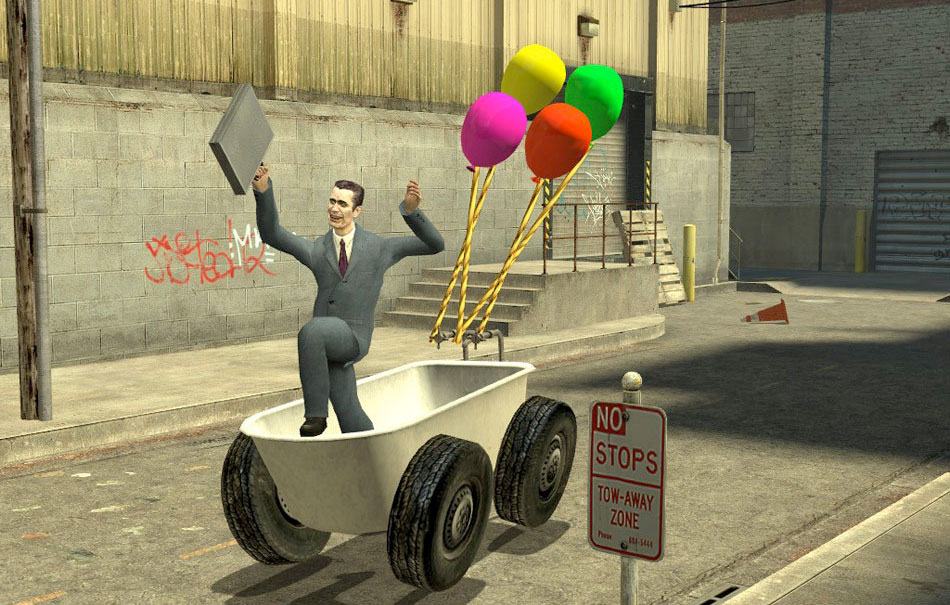
That’s why Art Goes Banana has no fixed format, no house style, no editorial calendar, no category we’re obliged to fill. We didn’t lose that structure. We refused to build one. It would kill the entire point of this absurd project.
An article can be a manifesto, a case study, a poem, a rant, an object, a pattern for something you can wear, or a question with no ending. If it moves us, we publish it. If it doesn’t, it doesn’t matter how well it fits a template.
Who We Are
We’re an Italian art collective.
We’re not a startup pretending to be a collective, and we’re not a collective pretending to be a business. We use the world as a lab. We create differently and we enjoy doing it.
We come from different places: art, law, design, fashion, technology, writing, science. We’re already serious, established and successful elsewhere, and we use this project as the one place where that seriousness doesn’t apply. That mix is the point. The most interesting ideas tend to appear where one field quietly leaks into another.
No résumés here. No names, no bios, no books or courses to sell you. Just the work.
We’re allergic to the polite, institutional, self-congratulating version of the art world, the one that has agreed, collectively, to stop being dangerous. The same goes for fashion when it forgets it was ever an art, and for any field that has mistaken its rules for its reasons.
We didn’t sign that agreement.
We think most of those worlds could use fewer people nodding along and a few more willing to say the uncomfortable, obvious thing out loud. Then build something better with the pieces.
Expect the Unexpected: The Waitlist Isn’t a Newsletter
Sign up and you’re not subscribing to updates.
You’re getting access to something with no fixed rhythm and no fixed rules. Sometimes we send a short note nobody else will ever read. Sometimes we let subscribers see a piece before it goes public, a ghost post, live for a moment, then gone. Sometimes we finish something and never publish it anywhere at all, and the only proof it existed is that a handful of people on this list saw it first.
There’s no schedule. That’s not an oversight. It’s the point.